
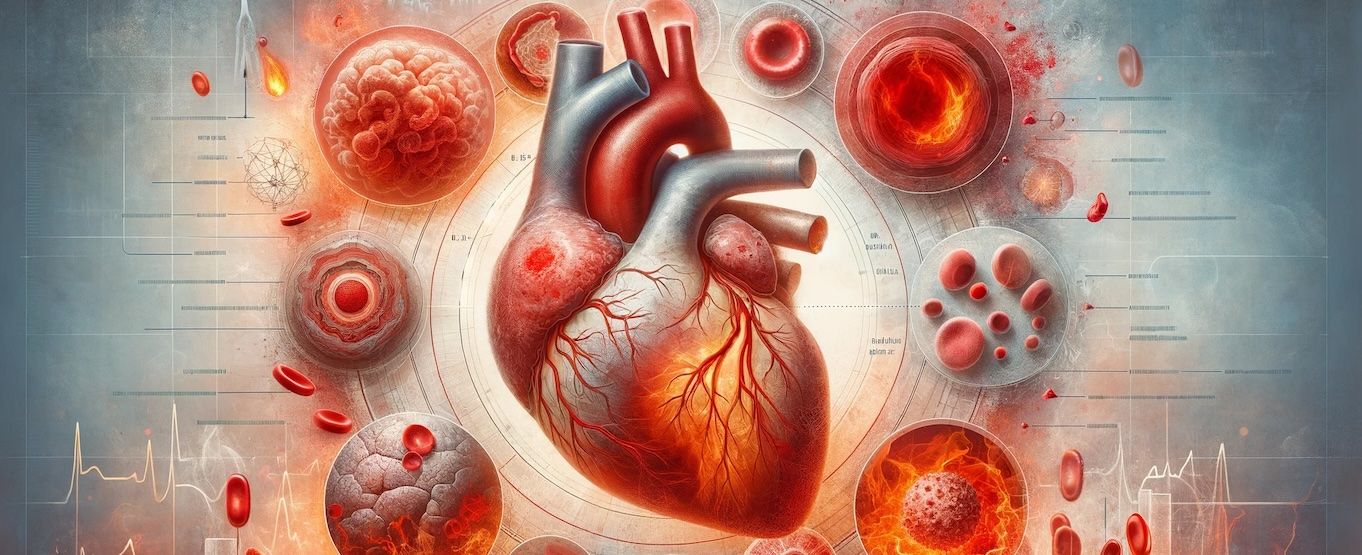
Inflammation, under the right circumstances, plays an important positive role in a variety of conditions, including fighting off infections by bacteria and viruses and healing from injuries. Under these circumstances, the body activates the immune system and sends out inflammatory cells such as neutrophils, monocytes, macrophages, and lymphocytes. These cells contain cytokines, which are small proteins that attract more inflammatory cells and amplify the inflammatory response. There are available blood tests to measure inflammation; the most sensitive one is called high-sensitivity C reactive protein, commonly referred to as hsCRP.
There is a dark side to chronic inflammation that predisposes to disorders such as atherosclerosis, arthritis, asthma, cancer, and diabetes. Our understanding of atherosclerotic cardiovascular disease (ASCVD) has evolved from being a disease of passive cholesterol accumulation in the wall of the artery to a disease that is driven by chronic inflammation.
Atherosclerosis is a disease process where the accumulation of fats, cholesterol, inflammatory cells, and other substances within the arteries' walls leads to plaque buildup. This plaque can grow within the artery, obstruct blood flow, or even worse, burst and lead to a blood clot or thrombosis. When atherosclerosis occurs in the coronary arteries to the heart or carotid arteries, it can lead to heart attack and stroke. When it occurs in the arteries to the legs, it can lead to pain with exercise called claudication or, in more extreme cases, amputation.
There are many contributors to the development of atherosclerosis, the most important of which is cholesterol. However, we know that even when cholesterol is well treated, people can still suffer from heart attack, stroke, and peripheral artery disease. This is what we call “residual risk,” the risk that remains even when cholesterol is controlled. We now know that inflammation plays an important role in residual risk and that elevated levels of hsCRP > 2 mg/dl indicate a high risk for heart attack and stroke, almost as important as a high cholesterol level. People known to have higher levels of hsCRP include the obese, diabetics, and those with chronic kidney disease. We now know that inflammation also plays a role in the development and progression of heart failure and chronic kidney disease.
Over the last thirty years, we have made great strides in the treatment of cholesterol with a variety of drugs, including statins, ezetemibe, bempedoic acid, and PCSK9-reducing drugs such that it is a very rare situation that cholesterol levels cannot be optimized. However, until recently, there has been limited focus on treatments directed at inflammation. One such treatment includes colchicine, a drug that has been used in the treatment of gout, and now we find we can prevent complications of coronary artery disease. The use of gout is limited by side effects, its interaction with other medications, and in patients with chronic kidney disease. Another clinical trial called the CANTOS trial, which targeted an inflammatory molecule called interleukin-1, reduced cardiovascular events by over 15% in patients with a history of coronary artery disease and well-treated cholesterol. Directly targeting another inflammatory molecule, interleukin-6 with zlitivekimab shows potential promise as it has been found to lower hsCRP levels in one study by over 90%. Elevated levels of interleukin-6 have been associated with a lifelong risk of developing atherosclerosis, and research findings suggest that lower levels of interleukin-6 can lower the risk of heart attack and stroke.
At the National Heart Institute, we have devoted significant resources to studies evaluating the effects of zlitivekimab in two clinical trials in patients with elevated hsCRP levels of 2 mg/dl and higher. One in patients with stage 3-4 chronic kidney disease and coronary artery disease, Zlitivekimab Cardiovascular Outcomes (ZEUS) Study, and the other in patients with heart failure with preserved or mildly reduced ejection fraction (HERMES) trial. The primary objective of the ZEUS trial is to demonstrate the superiority of ziltivekimab as a once-monthly subcutaneous injection in reducing the risk of major adverse cardiovascular events (cardiovascular death, non-fatal myocardial infarction or non-fatal stroke) compared to placebo, both added to standard of care, in participants with established atherosclerotic coronary vascular disease, chronic kidney disease, and systemic inflammation. The HERMES trial is designed to evaluate the effects of ziltivekimab administered as a once-monthly subcutaneous injection and added to the standard of care, on morbidity and mortality of participants with heart failure with mildly reduced ejection fraction or preserved ejection fraction and systemic inflammation.